
Your lease is ending, the new premises are almost ready, and there is one job left that many tenants underestimate: returning the old unit to the condition the landlord expects. In Singapore this is called commercial reinstatement, and how well it is done often decides whether you get your security deposit back in full.
This guide explains what reinstatement means, what it usually includes, when to start, and what affects the cost, so you can plan it early instead of rushing it in the last two weeks.
What is commercial reinstatement?
Commercial reinstatement is the process of removing your fit-out and restoring a rented space to its original or agreed condition at the end of a tenancy. It applies to offices, retail shops, F&B outlets, warehouses and factory units. The exact standard is set by your tenancy agreement, not by the contractor, so the lease is always the starting point.
Some leases ask for a full return to “bare” condition. Others ask you to restore only what you changed, or to return the unit to a “base building” standard set by the landlord. A few landlords will accept some of your fittings if the next tenant wants them, but this must be agreed in writing.
What reinstatement usually includes
Every unit is different, but most commercial reinstatement projects include some or all of the following:
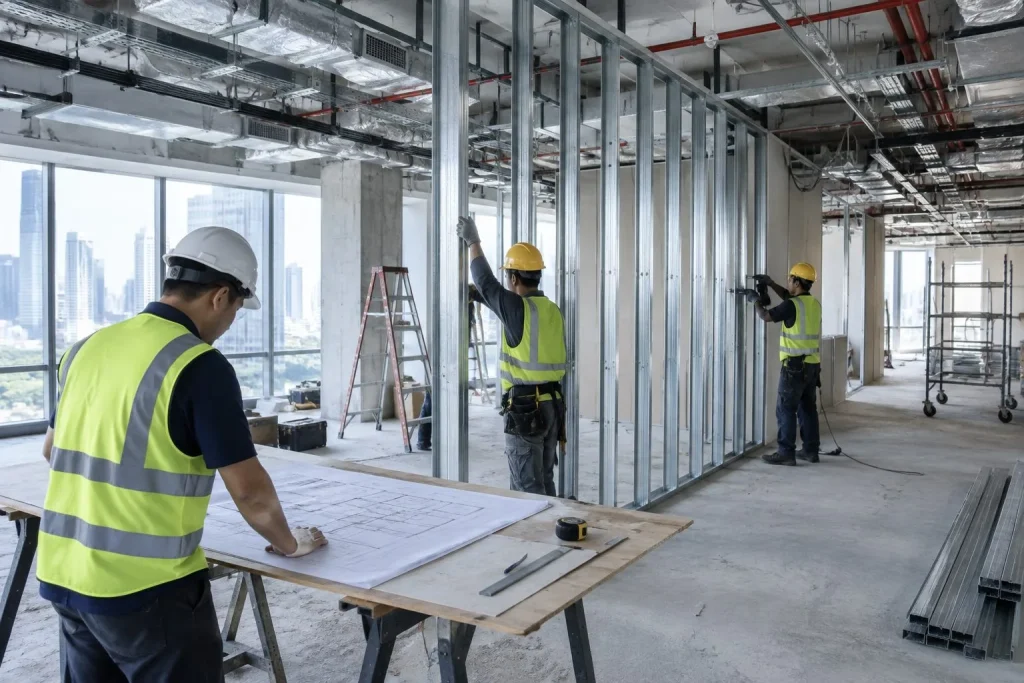
- Hacking and demolition works: Dismantling partitions, glass walls, doors and built-in carpentry
- Removing false ceilings, bulkheads and added lighting, then restoring the original ceiling grid
- Lifting carpet, vinyl, raised flooring or tiles and making good the floor screed
- Hacking and removing added walls, counters, pantries or plinths
- Terminating and making safe added electrical points, data cabling and DBs
- Air-conditioning removal and relocation: Removing or relocating added air-conditioning units, ducting and trunking
- Repainting walls: Patching holes, plastering and repainting walls to the original colour
- Debris disposal and a final clean before the joint inspection
If your unit is a shop or F&B outlet, you may also need to remove exhaust hoods, grease traps, signage and shopfront fittings, which often need extra coordination with building management.
When should you start planning?
A good rule is to start three to six months before your lease end date. That gives you time to read the reinstatement clause, request the original floor plan from the landlord, arrange a site visit with a contractor and agree the scope before any work begins.
The works themselves can take anything from a few days for a small office to several weeks for a large or heavily fitted unit. Many buildings only allow noisy works such as hacking after office hours or on weekends, which can stretch the timeline. Build in a buffer for the landlord’s inspection and any rectification they ask for.
What affects the cost of reinstatement?
There is no fixed price per square foot that fits every job. The main factors are:
- Size of the unit and how much fit-out was added
- Amount of hacking, especially wet areas, pantries and tiled floors
- Electrical, aircon and plumbing works that must be terminated or restored
- Building rules on working hours, lift use, protection and permits
- Volume of debris and how it must be disposed of
- Specific finishes the landlord requires, such as a particular paint colour or ceiling board
Ask for an itemised quotation so you can see exactly what is included. A lump-sum quote with no breakdown makes it hard to compare contractors or to check what was missed.
Common mistakes tenants make
- Leaving the contractor booking until the final month, when good teams are already committed
- Not checking the lease clause, then doing too little (deposit deducted) or too much (wasted spend)
- Forgetting to book the building’s loading bay, lifts and work permits
- Skipping a pre-handover walk-through with the landlord
- Using several separate vendors who do not coordinate, causing delays between trades. Working with a one-stop building contractor can help coordinate the different trades.
How Whoosh Singapore helps
Whoosh Singapore has handled building works in Singapore for over 20 years, with a team of more than 85 trained professionals. Because hacking, electrical, ceiling, painting and aircon works are managed by one team, your reinstatement runs on one schedule with one point of contact. We review your lease requirements, survey the unit, give you an itemised quote and coordinate with building management through to handover.
Before you move out, use our office reinstatement checklist to make sure nothing is missed, and see our full commercial reinstatement services for what we cover.
Planning your move-out? Contact us / Get a quote for a site visit and an itemised reinstatement quotation.
Frequently Asked Questions (FAQ)
Q1. What does commercial reinstatement mean in Singapore?
It means restoring a rented commercial space, such as an office, shop or warehouse, to the condition stated in your tenancy agreement before you hand it back. This usually involves removing your fit-out, making good the walls, ceiling and floor, and cleaning the unit.
Q2. Is reinstatement the tenant’s responsibility?
In most commercial leases in Singapore, yes. The tenancy agreement normally requires the tenant to reinstate the premises at their own cost. Check your reinstatement clause, as some landlords accept partial reinstatement or keep certain fittings.
Q3. How long does commercial reinstatement take?
A small office may take a few days, while a large or heavily fitted unit can take several weeks. Building rules on after-hours work and the landlord’s inspection can add time, so start planning three to six months before your lease ends.
Q4. How much does commercial reinstatement cost?
Cost depends on unit size, the amount of fit-out, hacking, electrical and aircon works, building rules and disposal. Ask for an itemised quotation after a site visit to get an accurate figure.
Q5. Can I keep some fittings for the next tenant?
Sometimes. If the landlord or incoming tenant agrees to take over certain fittings, get that agreement in writing before you start works, so it is not treated as incomplete reinstatement.